The Real Reason New Hires Quit Before Completing 3 Months
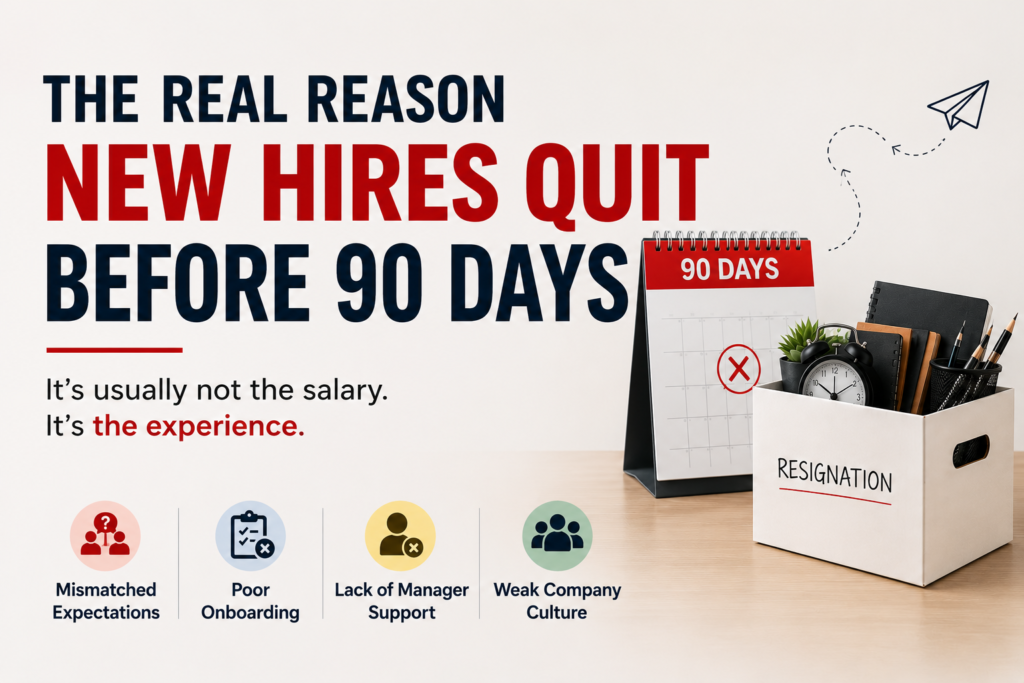
We hired the right candidate. So why did they leave in just 60 days?”
It’s a question HR professionals and founders are asking more frequently than ever.
Companies are investing heavily in recruitment, conducting multiple interview rounds, negotiating offers, and competing for talent. Yet many new hires are resigning within their first 90 days.
Most employers assume compensation is the problem. In reality, early attrition is rarely about salary alone.
The Expectation Gap
One of the biggest reasons employees leave within the first three months is the gap between what was promised during recruitment and what they experience after joining.
- The role sounds exciting during interviews.
- The company culture appears collaborative.
- Growth opportunities seem abundant.
Then reality hits.
The actual responsibilities are different. The work environment is not what they expected. The support they anticipated is missing.
When expectations and reality don’t match, employees begin questioning their decision almost immediately.
Poor Onboarding Is Costing Companies Talent
Many organizations put tremendous effort into hiring but very little into onboarding. Once an employee joins, the assumption is that they will “figure things out.”
However, the first few weeks are critical.
Employees need:
- Clear goals
- Structured training
- Regular manager interaction
- Defined expectations
- A sense of belonging
Without these elements, new hires often feel disconnected and overwhelmed. By the time the organization notices, the employee has already started exploring other opportunities.
Managers Matter More Than Companies
Employees don’t leave companies as often as they leave managers. A supportive manager can help a new hire overcome challenges, build confidence, and integrate into the team.
On the other hand, poor communication, lack of feedback, micromanagement, or unrealistic expectations can push employees out very quickly.
The manager-new hire relationship often determines whether an employee stays beyond probation.
The Search Doesn’t Stop After Joining
Today’s candidates have more access to opportunities than ever before. Even after accepting an offer, recruiters continue reaching out through LinkedIn, job portals, and referrals.
If a new employee feels uncertain about their decision, another opportunity is only a message away.
This means employers must continue “selling” the organization even after the candidate joins.
Employee engagement starts on Day 1, not after confirmation.
Hiring for Skills but Ignoring Culture
Many organizations focus heavily on technical skills while overlooking cultural fit and behavioural alignment. A candidate may have the perfect resume but struggle to adapt to the company’s pace, leadership style, or work environment.
The result?
Strong performers on paper become early resignations in practice.
What Companies Can Do Differently
Reducing early attrition doesn’t start after an employee resigns. It starts during recruitment.
Organizations should:
- Present an honest picture of the role
- Set realistic expectations during interviews
- Build a structured onboarding process
- Schedule regular check-ins during the first 90 days
- Train managers to support new hires effectively
- Measure early attrition and identify patterns
Final Thoughts
When a new hire leaves within three months, the cost goes far beyond recruitment expenses. The company loses productivity, team morale suffers, and the hiring process starts all over again.
The organizations winning the talent war today aren’t necessarily the ones paying the highest salaries. They’re the ones creating an experience that makes employees want to stay.
Because retention doesn’t begin after probation. It begins before the offer letter is even signed.
HR Huddle Insight:
If multiple employees are leaving within their first 90 days, don’t just examine the candidates. Examine the hiring process, onboarding experience, and manager effectiveness. The root cause often lies there.
“